Image: Trinidad Test Match (1930) - West Indies v England
West Indies Cricket Books
From calypso flair to fast-bowling fire — explore the story of West Indies Cricket. The West Indies didn’t just play cricket — they transformed it. From the early touring sides to the golden era of dominance, West Indies cricket is one of the sport’s most unforgettable chapters. At The Fine Art Hut, we curate collectible West Indies cricket books that capture the legends, the rivalries, and the moments that shaped the game.
West Indies cricket is a story of identity, pride, brilliance, and artistry — a multi-island team that became a global sporting force. Whether you’re drawn to the elegance of the batting, the swagger of the supporters, or the fearsome pace attacks that ruled world cricket, West Indies history is rich with characters and turning points worth collecting.
This is cricket history told through:
-
classic tour accounts
-
biographies of iconic players
-
rare first editions and contemporary commentary
-
books that trace the social and cultural heartbeat of Caribbean sport






Rise of West Indies Cricket
West Indies cricket did not emerge overnight as a global force. Its foundations were laid slowly, shaped by island rivalries, colonial structures, and the powerful tradition of overseas touring. Long before dominance came respect — and that respect was earned the hard way.
In the late 19th and early 20th centuries, cricket in the Caribbean existed primarily as an island-based pursuit, with Barbados, Jamaica, Trinidad, and British Guiana developing strong but separate cricketing cultures. Matches between islands were fiercely contested, yet there was no true sense of a unified West Indies team until touring sides began venturing abroad.
Early West Indies tours — particularly to England — became the crucible in which a collective identity was forged. These tours were arduous affairs: long sea voyages, unfamiliar conditions, and a relentless schedule against county and representative sides. Results were often mixed, but the exposure was invaluable.
The landmark 1928 tour of England, which led to West Indies being granted Test status, marked a turning point. Though defeats were heavy, the tour announced the arrival of a new international side — one representing multiple islands, cultures, and styles under a single banner.
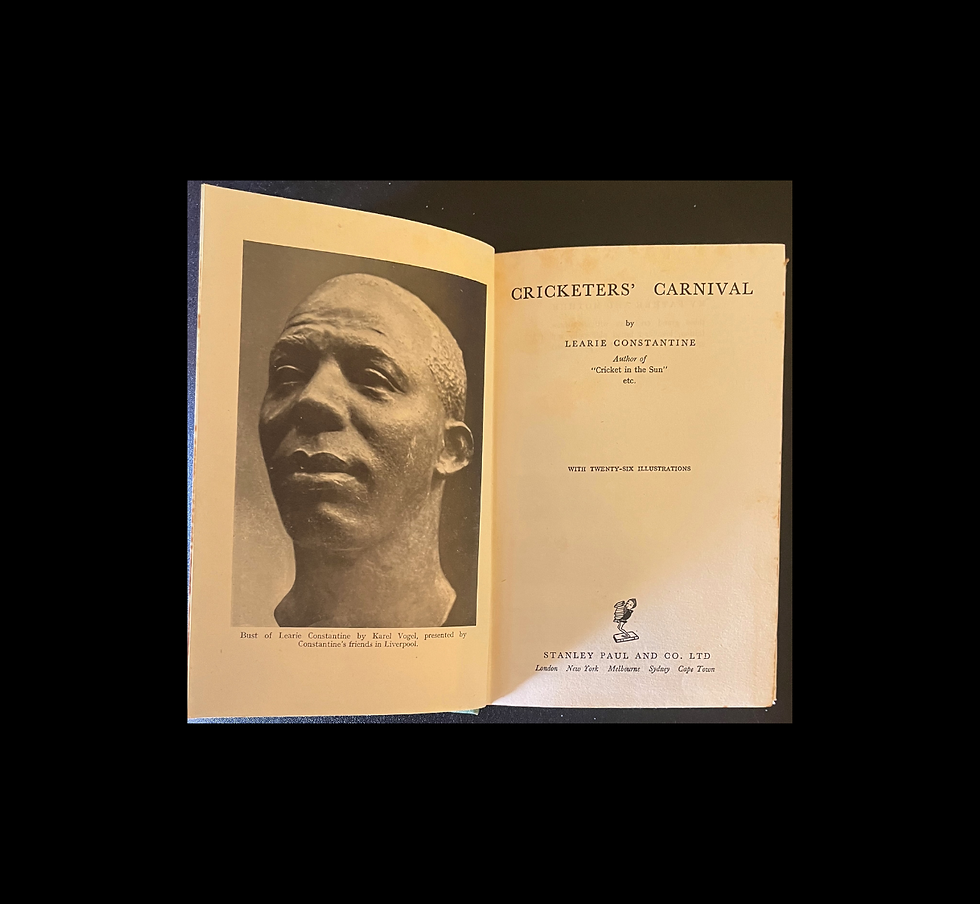
Subsequent tours in the 1930s showed rapid improvement. Players such as Learie Constantine brought athleticism, flair, and professionalism that challenged prevailing assumptions about colonial teams. Constantine’s performances — particularly in English conditions — resonated far beyond the scorebooks, helping redefine how West Indies cricket was perceived.

The Early West Indies Cricket Books
The early West Indies tours coincided with a golden age of cricket writing, and West Indies cricket became a compelling subject for journalists, commentators, and players alike. Tour diaries, match reports, and reflective accounts from this period are among the most sought-after books by collectors today.
What makes this writing so valuable is not just rarity, but perspective. These books document:
-
the struggle to gain acceptance at the highest level
-
the cultural tensions of touring within the British Empire
-
the early emergence of a distinct West Indies style
-
the personalities who would shape future generations
Many books were published in relatively small print runs, often intended for contemporary readers rather than posterity — a key reason first editions from this era are now increasingly scarce.
By the mid-1930s, West Indies tours were no longer novelties. The team had proven it belonged on the international stage, capable of competing with established cricketing nations on their own terms. More importantly, these tours laid the groundwork for something deeper: a shared cricketing identity that transcended individual islands.
The transformation from touring curiosity to respected international side is one of the most compelling arcs in cricket history — and one best understood through the books written at the time.
The Captains Who Changed the Conversation

West Indies cricket did not rise through individual brilliance alone. Its transformation into a confident, unified, and feared international side was driven by a sequence of captains who reshaped not just how the team played — but how it saw itself.
Leadership in West Indies cricket carried a significance beyond tactics and team selection. Captains were required to unite players from different islands, backgrounds, and traditions, while also navigating the expectations and pressures of the colonial and post-colonial cricketing world.
Learie Constantine: Leadership Before the Title
Before West Indies cricket had a formally recognised long-term captaincy structure, Learie Constantine emerged as one of the most influential leadership figures the team ever produced — not always through the armband, but through example, intellect, and authority.
Constantine captained the West Indies on select occasions during the 1930s, but his true impact lay in reshaping how West Indies cricketers were perceived, both on and off the field. An extraordinary all-rounder, Constantine combined athletic brilliance with professionalism at a time when Caribbean players were still viewed through a colonial lens.
On tour — particularly in England — Constantine became a standard-bearer. He demanded fair treatment, challenged entrenched assumptions, and demonstrated that West Indies cricketers could match, and often surpass, their opponents in skill, discipline, and character. In doing so, he helped prepare the ground for the more formal leadership revolutions that would follow.
Beyond cricket, Constantine’s later achievements — including his legal career and elevation to the House of Lords — reinforced the sense that West Indies leadership extended beyond the boundary rope.
For collectors, books that cover Constantine’s career are prized not just for their cricketing insight, but for what they reveal about identity, race, and authority in the early international game.
In many ways, Learie Constantine changed the conversation before West Indies cricket was ready to formalise it. His influence helped create the conditions in which strong, respected West Indies captains could eventually emerge — transforming leadership from an imposed role into a source of pride and unity.


Frank Worrell: Leadership with Purpose
The appointment of Frank Worrell as the first long-term Black captain of the West Indies marked a watershed moment in cricket history. Worrell’s leadership extended beyond the boundary rope. He fostered respect, professionalism, and mutual trust, creating an environment where players felt valued as equals.
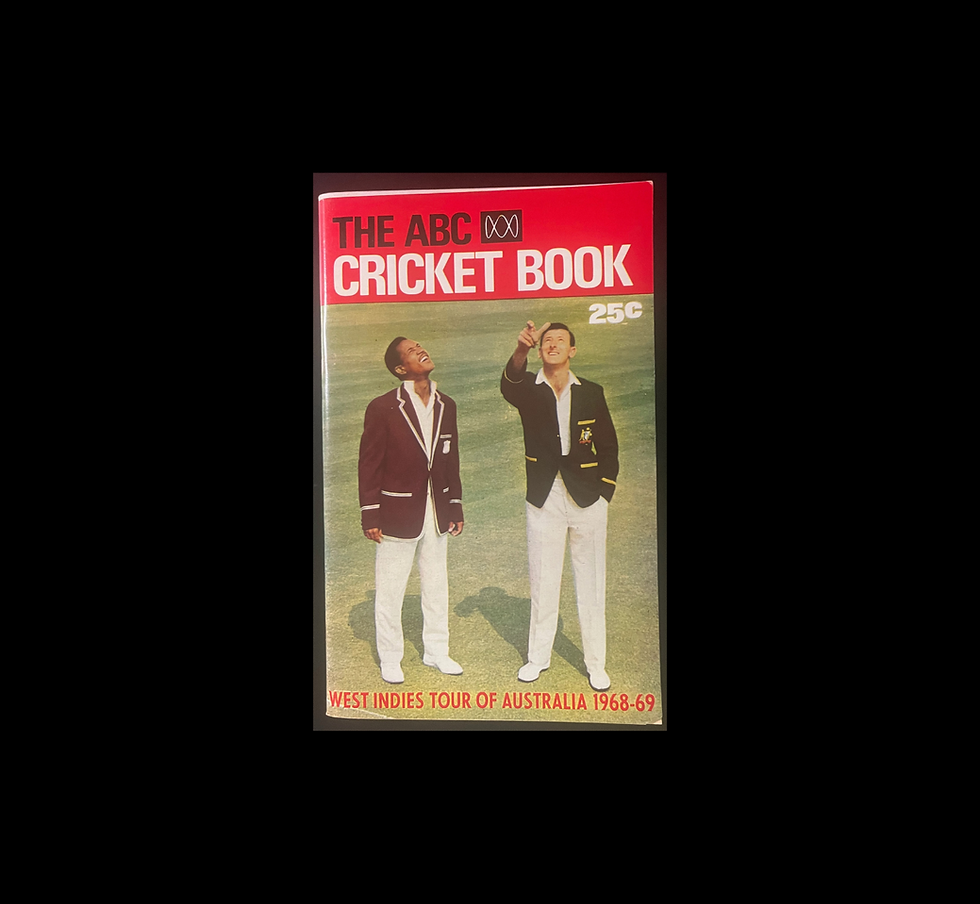
The famous 1960 tour of Australia under Worrell’s captaincy did more than produce thrilling cricket — it fundamentally changed how West Indies cricket was perceived worldwide. Many classic cricket books from this era capture the sense that something profound had shifted: West Indies cricket had found its voice.


Garfield Sobers: Genius with Authority
If Worrell gave West Indies cricket its moral compass, Garfield Sobers embodied its limitless potential. As captain, Sobers combined extraordinary individual talent with a growing sense of strategic maturity.
Books that explore Sobers’ leadership often reveal a captain learning to balance genius with responsibility — managing gifted players while setting new standards of excellence. His captaincy bridged the foundational era established by Worrell and the more assertive, dominant mindset that would soon follow.
Collectors prize Sobers-era books for their insight into a side discovering that brilliance could be sustained, not sporadic.


Clive Lloyd: Authority, Unity, and Steel
The next great shift came under Clive Lloyd, whose leadership transformed West Indies cricket into the most formidable team in the world. Lloyd’s captaincy was defined by discipline, clarity of purpose, and an uncompromising demand for excellence.
Under Lloyd, leadership became institutional. Standards were non-negotiable. Roles were clearly defined. The team’s confidence hardened into authority.
Many of the most sought-after West Indies cricket books — including tour accounts, autobiographies, and contemporary analyses — focus on this era, exploring how Lloyd’s leadership forged a dynasty built on fast bowling, resilience, and collective belief.


The Golden Era of West Indies Cricket
From the mid-1970s through the late 1980s, the West Indies were not merely competitive — they were overwhelming. Matches were played on West Indies terms, dictated by pace, power, and an unshakeable collective belief.
Fearless Batting and Total Confidence
Batting during the golden era was defined by intent. Under the leadership of Clive Lloyd and later embodied by players such as Viv Richards, West Indies batting rejected caution. Fast bowlers were attacked, fields were challenged, and intimidation flowed both ways.
Books from this era repeatedly emphasise that this approach was not reckless — it was psychological. By dominating opponents mentally, West Indies teams often won contests long before the final session.
Autobiographies and contemporary journalism from the period capture this mindset vividly, offering readers insight into how confidence became institutional rather than individual.
Athletic Fielding as a Weapon
Fielding, often overlooked in earlier cricket eras, became a defining strength of West Indies teams. Speed, anticipation, and throwing accuracy turned pressure into wickets and restricted even the strongest opposition line-ups.
Cricket writers of the time noted that West Indies fielding reflected something deeper: youth, fitness, and a modern athleticism that many established teams struggled to match. These observations, preserved in match reports and tour accounts, are now invaluable historical records.
The Fast-Bowling Revolution
At the heart of West Indies dominance lay the most feared fast-bowling tradition the game has known. Rather than relying on one strike bowler, West Indies teams unleashed units — waves of pace, aggression, and precision.
Tour diaries and player memoirs from England, Australia, and the subcontinent describe hostile spells, shortened careers, and a sense that West Indies fast bowlers were redefining what sustained pressure meant in Test cricket.
Winning Away, Everywhere
Perhaps the most remarkable aspect of the golden era was West Indies’ ability to dominate away from home. Series victories in England and Australia — traditionally the most difficult environments — reinforced the idea that West Indies cricket travelled exceptionally well.

West Indies Cricket – The Golden Era Players (c. 1975–1988)
-
Clive Lloyd (Captain)
-
Viv Richards
-
Gordon Greenidge
-
Desmond Haynes
-
Larry Gomes
-
Michael Holding
-
Andy Roberts
-
Malcolm Marshall
-
Joel Garner
-
Colin Croft
-
Sylvester Clarke
-
Lance Gibbs
-
Jeff Dujon

West Indies Cricket: The Post-Golden Era (Mid-1980s–Early 2000s)
The Post-Golden Era of West Indies cricket marks a period of transition, resilience, and individual brilliance. Emerging in the mid-1980s and stretching into the early 2000s, this era followed the unprecedented dominance of the fearsome pace quartets and invincible teams of the 1970s and early 1980s. While the West Indies no longer ruled world cricket with absolute authority, they remained a formidable force—driven by iconic personalities, record-breaking performances, and a deep sense of cricketing pride.
A Shift from Collective Dominance to Individual Genius
As the great fast-bowling units of the Golden Era gradually disbanded, West Indies cricket entered a more competitive global landscape. Australia, Pakistan, and South Africa rose in strength, and victories were hard earned. In this environment, success increasingly hinged on exceptional individuals rather than overwhelming collective power.
Foremost among them was Brian Lara, whose batting genius came to define the era. Lara’s elegance, concentration, and appetite for monumental scores culminated in some of the most extraordinary feats in cricket history, including his world-record Test innings of 375 and later 400 not out. His performances often carried the hopes of the entire region, making him not just a cricketer, but a cultural symbol of Caribbean excellence.
Enduring Pace and Leadership
Despite the changing times, fast bowling remained a cornerstone of West Indies identity. Courtney Walsh embodied continuity with the past—combining relentless competitiveness, durability, and leadership. Alongside him, Curtly Ambrose delivered hostility and precision, forming one of the last truly great West Indian bowling partnerships.
Leadership during this era was shaped by figures such as Richie Richardson, whose intensity and charisma helped maintain standards and belief during a period of rebuilding.
A Golden Thread for Collectors and Readers
For cricket historians and collectors, the Post-Golden Era is richly documented through autobiographies, tour diaries, and reflective cricket writing. These works capture:
-
the pressure of succeeding legends of an unmatched era
-
the brilliance of individual performances amid adversity
-
the cultural and emotional significance of West Indies cricket in a changing world
Legacy of the Post-Golden Era
Though less dominant than its predecessor, the Post-Golden Era remains vital to the West Indies story. It preserved the region’s cricketing identity, produced some of the game’s greatest individual achievements, and bridged the gap between legendary dominance and modern reinvention.
Key players during the post-West Indies cricket golden era period included:
-
Courtney Walsh
-
Brian Lara
-
Curtly Ambrose
-
Richie Richardson
-
Carl Hooper
-
Jimmy Adams; and
-
Shivnarine Chanderpaul

A Summing-Up: The Enduring Story of
West Indies Cricket
West Indies cricket is one of the most powerful and distinctive stories in the history of the game. Born from small islands with a shared colonial past, it rose to become a global cricketing force whose influence far outweighed its geography. At its peak, West Indies cricket redefined excellence—combining fearless batting, athletic fielding, and fast bowling of unprecedented pace and hostility—while projecting confidence, unity, and cultural pride onto the world stage.
From the elegance and all-round brilliance of Garfield Sobers, to the swagger and authority of Viv Richards, through to the record-breaking genius of Brian Lara, West Indies cricket has consistently produced players who transcend statistics and eras. These figures were not merely great cricketers; they became cultural icons—symbols of self-belief, resistance, and creative freedom.
Even as global cricket evolved and dominance proved harder to sustain, West Indies cricket retained something uniquely its own: a style rooted in flair, individuality, and emotional connection. Victories were celebrated with joy and rhythm; defeats carried reflection but rarely submission. The team’s journey has mirrored the broader Caribbean experience—moments of overwhelming success, periods of transition and challenge, and an enduring sense of identity that refuses to fade.
Today, West Indies cricket stands as both legacy and living tradition. Its history is endlessly revisited through classic matches, legendary tours, and timeless cricket literature, while its influence continues to shape how the game is played, watched, and remembered. Few teams have left such a deep imprint on world cricket—not just in trophies and records, but in spirit.
In the end, West Indies cricket is more than a collection of eras or players. It is a story of unity across islands, brilliance against odds, and a style of cricket that changed the game forever.